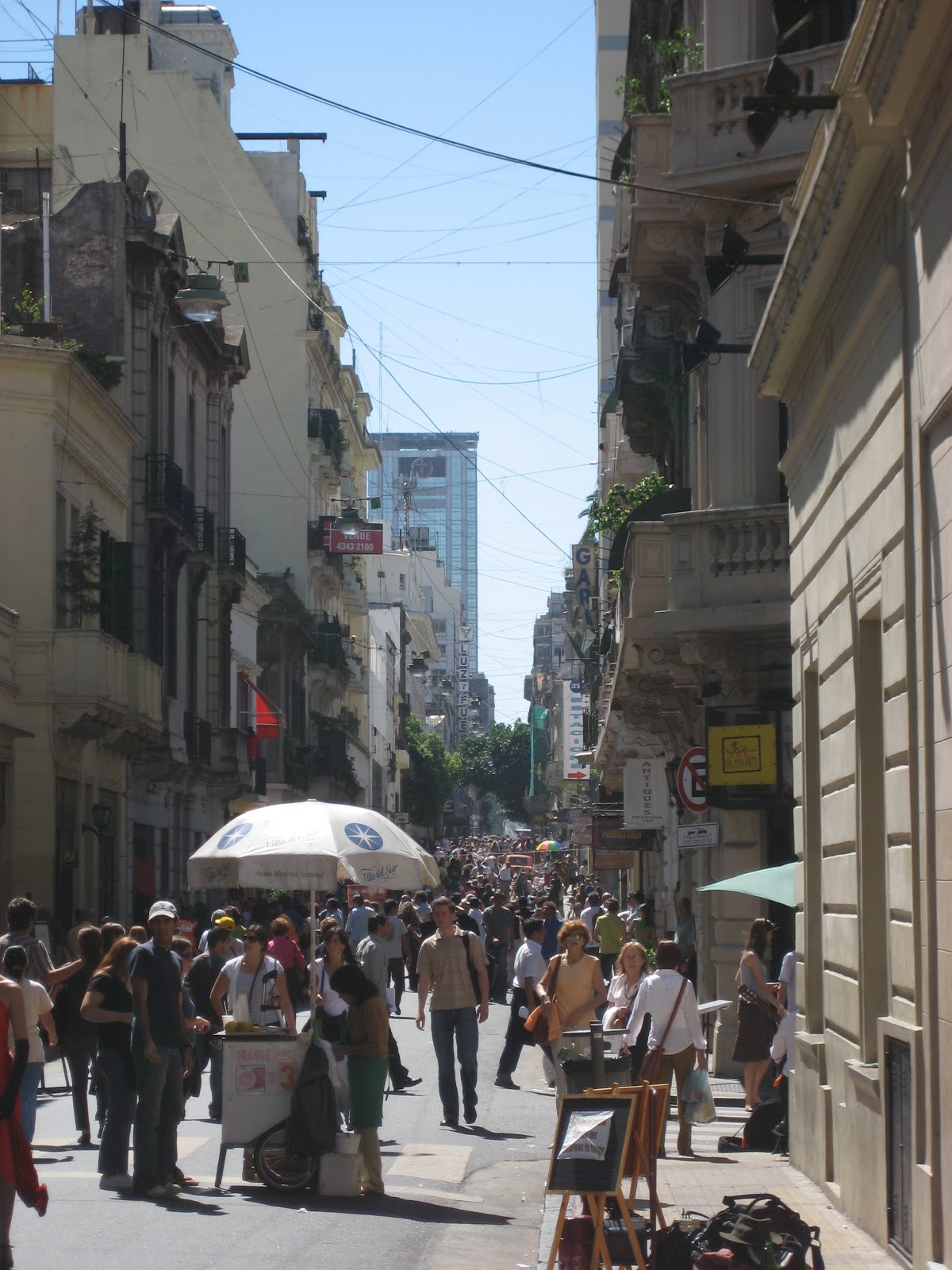
 If the city of Buenos Aires had a soundtrack, it would no
doubt be filled with tango music. The emotionally-charged music and dance
style, which emerged from a mixing of European, African, and indigenous
cultures in the 19th century, has become the Buenos Aires’ trademark (at least
for outsiders like me), lending form to a sense of nostalgia often associated
with porteño culture. When I had the
opportunity to spend a few months working in Buenos Aires in 2007, I made a
point of visiting a few of the city’s established milongas and even took a few dance lessons. Yet, in my
conversations with young artists, writers, and musicians, most expressed little
interest in the tango tradition—that was their grandparents’ music.
If the city of Buenos Aires had a soundtrack, it would no
doubt be filled with tango music. The emotionally-charged music and dance
style, which emerged from a mixing of European, African, and indigenous
cultures in the 19th century, has become the Buenos Aires’ trademark (at least
for outsiders like me), lending form to a sense of nostalgia often associated
with porteño culture. When I had the
opportunity to spend a few months working in Buenos Aires in 2007, I made a
point of visiting a few of the city’s established milongas and even took a few dance lessons. Yet, in my
conversations with young artists, writers, and musicians, most expressed little
interest in the tango tradition—that was their grandparents’ music.
In 2009,
the cities of Buenos Aires and Montevideo joined forces to nominate the
tradition of tango to the UNESCO Representative List of Intangible Cultural
Heritage of Humanity. The list
comes out of the 2003 Convention
for the Safeguarding of Intangible Heritage, a UNESCO instrument designed
to protect and revitalize culture traditions or living cultural expressions
such as oral traditions, performing arts, and festive events. As signatories to
the 2003 Convention, States Parties are committed to safeguarding and
revitalizing identified intangible heritage in their territories.
So, how does one safeguard and promote the intangible
cultural heritage? The Convention itself does not provide specifics, but does state
that Parties should report on legislative, regulatory and other measures taken
every six years. Last week, at an event
hosted by the Americas Society, I had the opportunity to ask Buenos Aires’
Minister of Culture, Hernán Lombardi, what steps Argentina was taking to
promote the tango. He outlined a
four-pronged strategy: ensure the existence the traditional tango ensemble, the
Orquesta Típica, through festivals and
competitions; preserve and disseminate tango scores; promote the production of
the bandoneón, the instrument
that lends the tango its signature sound; and spark young people’s interest in
tango by integrating tango music and dance into school curricula. He added that
the best way to interest young people in tango was to link it to the
possibility of romance. Lombardi’s office also supports a major annual festival
dedicated to tango in both its traditional and contemporary expressions, Tango
Buenos Aires.
Have these policy efforts paid off in breathing new life
into the tango tradition? I couldn’t find any details of the the Ministry's strategy online, or how much it costs to implement, but will be looking for Argentina’s UNESCO report in 2015.


